

C-PACE for Commercial Solar At a Glance
Mecklenburg County has adopted North Carolina’s statewide Commercial Property Assessed Capital Expenditure (C-PACE) program. Eligible commercial property owners can now finance up to 100% of a qualifying solar project — hardware, labor, interconnection, soft costs, and storage — with no out-of-pocket capital, a 20- to 30-year term, a fixed rate, and no acceleration on default.
The financing repays through a special assessment on the property tax bill, runs with the land at sale, and — critically — does not consume the federal Investment Tax Credit (ITC) or MACRS depreciation. The owner keeps the tax benefits the IRS allows the project owner to claim.
Up to 100%
20–30 Years
30–70%
Up to 35%
Why This Matters Right Now
The federal commercial solar ITC is on a deadline. Under the One Big Beautiful Bill Act (OBBBA, signed July 4, 2025), commercial solar projects must begin construction on or before July 4, 2026 to remain eligible for the full 30% Section 48E ITC (with prevailing-wage / apprenticeship compliance), or be placed in service by December 31, 2027 if construction starts later.
Bonus adders for Domestic Content (+10%), Energy Community (+10%), and Low-Income Community (+10–20%) can stack the credit to 50%–70% of project cost.
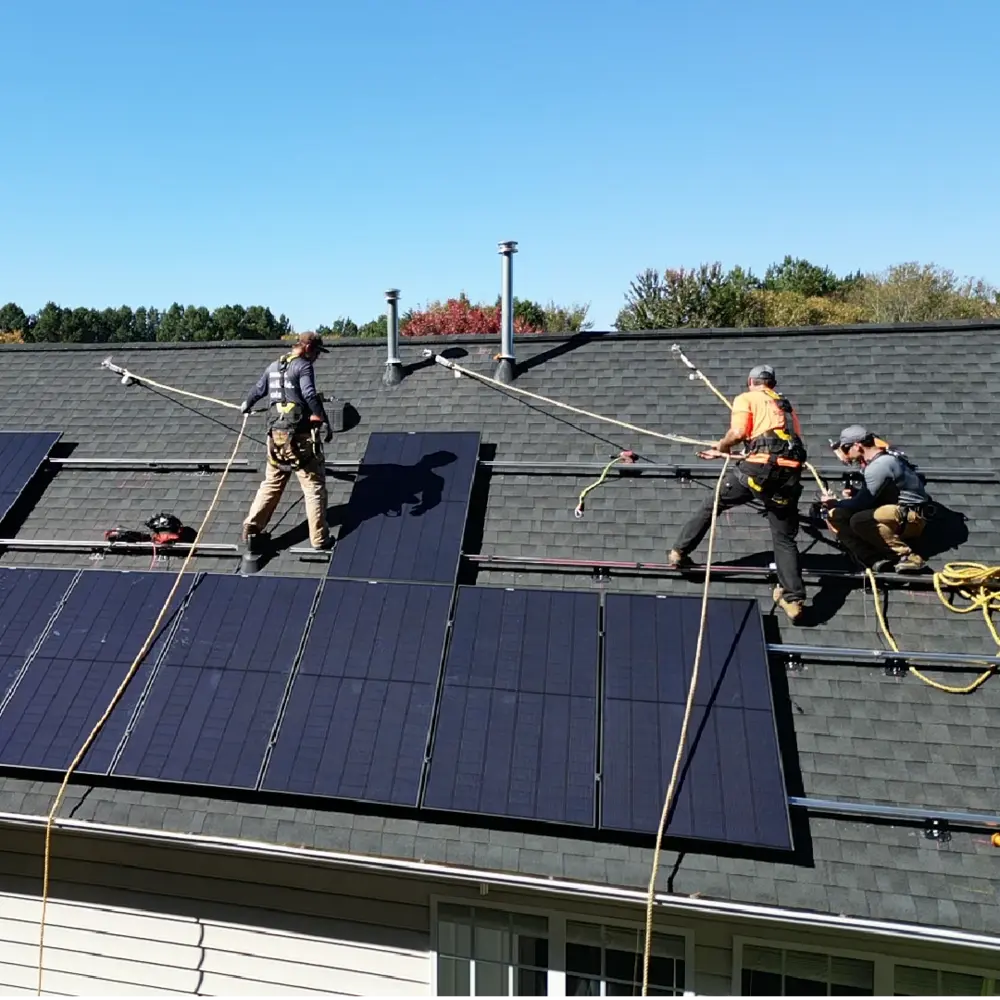
C-PACE is the financing tool built for this moment. It pays cash to the contractor at construction draws, lets the property owner monetize ITC, MACRS, and bonus depreciation in the same tax year, and amortizes the remaining cost over a term matched to the useful life of the asset.
The Economic Picture
| Component | How it shows up for the owner |
|---|---|
| C-PACE financing | Pays 100% of installed cost at construction draws — contractor never goes unpaid, owner contributes $0 at COD. |
| Federal ITC (Section 48E) | 30% base credit + bonus adders. Property owner claims it (or transfers it for cash under §6418). C-PACE does not reduce the credit basis. |
| MACRS + bonus depreciation | 5-year MACRS schedule with first-year bonus depreciation accelerates non-cash deductions. |
| Energy Savings | Avoided Duke Energy savings offset C-PACE assessments. |
| Asset value | Higher NOI → higher capitalized value at the building’s cap rate. The assessment runs with the land and transfers cleanly at sale. |
North Carolina C-PACE — Status
Enabling law
North Carolina Senate Bill 802 (“C-PACE Program”) was signed by Governor Roy Cooper on July 8, 2024 and is codified at N.C. Gen. Stat. Chapter 160A, Article 10B.
Statewide structure
The N.C. Department of Commerce is the program sponsor; the Economic Development Partnership of North Carolina (EDPNC) is the statewide administrator. EDPNC published the official North Carolina C-PACE Program Guidelines and Toolkit in January 2025.
Local adoption
Counties and municipalities opt in by passing a participation resolution. Mecklenburg County and the City of Charlotte have adopted resolutions — commercial property owners in the county can apply through EDPNC and an approved capital provider.
Eligible properties
Commercial, industrial, agricultural, nonprofit, and multifamily residential of five or more units. Owner-occupied 1–4 unit residential is not eligible.
Eligible improvements
Renewable energy (including solar PV and battery storage), energy efficiency, water conservation, and resilience measures.
Financing parameters
Up to 35% loan-to-value of the property, term matched to the useful life of the improvement (typically 20–30 years for solar), fixed rate, fully amortizing, non-recourse to the owner, non-accelerating on default.
How a C-PACE Solar Project Closes
Project scoping. Renu develops the engineering, energy model, and pricing. Savings-to-Investment Ratio must be ≥ 1.0 for energy projects under the NC toolkit.
Capital provider selection. The owner chooses an EDPNC-approved C-PACE capital provider. Renu is lender-agnostic and will run a competitive process.
Mortgage-holder consent. Any existing mortgage lender on the property executes a one-page consent. The senior mortgage retains its priority on foreclosure; only past-due C-PACE installments come ahead of it.
Closing and assessment recording. EDPNC reviews the application, the local government executes the assessment agreement, and the lien is recorded on the property.
Construction draws. The C-PACE lender funds Renu directly against project milestones. The owner contributes no cash.
Repayment. Mecklenburg County collects the special assessment with the property tax bill and remits to the C-PACE lender. A single line item on the tax bill, fully passable through to NNN tenants where the lease allows.
Next Steps with Renu
Renu Energy Solutions has been installing solar and energy storage in the Carolinas since 2010. Our commercial division handles C-PACE-financed projects from feasibility through interconnection, including:
- Free utility-bill and rooftop feasibility analysis (your Duke Energy bills + a satellite review).
- Pro-forma showing the C-PACE assessment against avoided utility cost on a year-by-year basis.
- Coordination with EDPNC, the chosen capital provider, and your senior mortgage lender on consent.
- Domestic-content sourcing where the +10% ITC bonus is in reach.
- Construction, commissioning, monitoring, and 25-year O&M.
To start: send 12 months of utility bills and the property address. We will return a one-page indicative C-PACE pro-forma within five business days.
Commercial Solar Inquiry
Renu does not sell your information to 3rd Parties.
"*" indicates required fields
C-Pace Mecklenburg County FAQs
1. The Basics
What is C-PACE?
C-PACE — Commercial Property Assessed Capital Expenditure — is a state-authorized financing structure that lets a commercial property owner pay for energy efficiency, solar, storage, water, and resilience improvements through a special assessment on the property tax bill. A private capital provider funds the project up front; the local taxing authority, in this case Mecklenburg County, collects a fixed annual installment alongside ad-valorem property taxes and remits it to the lender.
How is C-PACE different from a regular commercial loan?
Three structural differences matter most for CFOs: (1) the obligation runs with the land, not the borrower, so it transfers cleanly at sale; (2) it is non-recourse and non-accelerating — miss a payment and the only remedy is the past-due installment, not the entire balance; and (3) the term can be 20–30 years, matched to the useful life of the asset. No conventional commercial mortgage offers all three.
Is this a tax? Is the government lending the money?
No on both counts. The government is the collection mechanism, not the lender. The capital comes from a private C-PACE capital provider. The county simply puts the assessment on the tax bill, which makes it senior, transferable, and reliably collected.
2. Eligibility
What property types qualify in North Carolina?
Under N.C. Gen. Stat. Chapter 160A, Article 10B, the program covers commercial, industrial, agricultural, nonprofit, and multifamily residential properties of five or more dwelling units. Owner-occupied 1–4 unit residential is not eligible — there is no R-PACE in North Carolina.
What improvements can C-PACE pay for in a solar project?
Anything that is part of the qualifying improvement: solar PV modules, inverters, racking, conduit, monitoring, batteries, interconnection upgrades, EV chargers tied to the solar, electrical service upgrades, roofing where it supports the array, engineering and design fees, permitting, commissioning, and Renu’s installation labor. C-PACE typically funds 100% of project hard and soft costs.
Can I use C-PACE on a brand-new construction project?
Yes. The NC toolkit allows C-PACE for retrofits, gut renovations, and new construction. On new construction the financing is sized to the qualifying-improvement portion of the project — for solar that means the PV system and the related electrical infrastructure.
Does my building need to be a certain size?
There is no statutory minimum. As a practical matter, C-PACE capital providers prefer projects $250,000 and up because of fixed legal and underwriting cost. Renu typically targets projects 100 kW and larger; smaller systems are usually better served by a conventional loan or cash purchase.
3. Cost, Term & Cash Flow
Up to how much can I finance?
Under the NC C-PACE statute, total C-PACE financing on a property is capped at 35% of the property’s value. For a typical commercial building this is more than enough headroom for a solar plus storage project.
What is the interest rate?
Rates are fixed for the entire term and set by the capital provider you select. As of early 2026, indicative rates for solar projects in North Carolina range roughly 7.0%–8.5%, depending on credit, term, project size, and where benchmark rates are trading. The rate is locked at closing — it does not float with the prime rate or SOFR.
How long is the term?
Up to the useful life of the improvements. For solar PV, capital providers commonly write 20- to 30-year terms. Longer terms shrink each annual installment and shape the assessment-to-utility-savings comparison.
What does the cash flow look like in year one?
Cash-flow impact is project-specific. The annual C-PACE installment is a fixed, level payment; avoided Duke Energy charges depend on the building’s rate class, demand profile, roof orientation, and net-metering tariff. For many commercial buildings, the avoided utility cost meaningfully offsets the assessment before counting the federal ITC, MACRS depreciation, or any state incentives — but the only honest answer is the year-by-year pro-forma Renu builds against your actual 12 months of bills.
Are there closing costs?
Yes, but they are typically rolled into the financing rather than paid out of pocket. Expect a one-time origination fee (1–3%), legal review, title work, and a small EDPNC program fee. All of it can be capitalized into the assessment, preserving the “zero-out-of-pocket” structure.
4. Tax Credits & Stacking — The Big Idea
If C-PACE pays for the system, do I still get the federal Investment Tax Credit?
Yes. This is the central feature of the C-PACE-plus-solar structure. C-PACE is debt, not a grant or a subsidy, so it does not reduce the depreciable or ITC-eligible basis of the project. The property owner — as the tax owner of the system — claims the full Section 48E ITC and MACRS deductions exactly as if the system were paid for in cash.
How big is the ITC in 2026?
The base credit under Section 48E is 30% of eligible project cost for projects meeting prevailing-wage and apprenticeship requirements. Bonus adders stack on top: +10% Domestic Content, +10% Energy Community, and +10–20% Low-Income Community. Total ITC can reach 50%–70% of eligible cost on a well-structured project.
What about MACRS and bonus depreciation?
Solar PV qualifies for 5-year MACRS, with the basis reduced by half of the ITC claimed, so a 30% ITC reduces depreciable basis by 15%. First-year bonus depreciation is also available. Together these accelerate non-cash deductions into the early years of the project — exactly when the C-PACE balance is largest.
Does my project have a deadline?
Yes, and it is short. Under the One Big Beautiful Bill Act (OBBBA), commercial solar projects must begin construction on or before July 4, 2026 to remain eligible for the Section 48E ITC under the safe-harbor rules — or, if construction starts later, be placed in service by December 31, 2027. The 5% cost-incurred safe harbor has been largely eliminated for projects above 1.5 MW AC; developers must rely on the Physical Work Test. This is why we are pushing customers to commit in Q2/Q3 2026.
What if I don’t have enough tax appetite to use the ITC?
Two paths: (1) Transferability under §6418 — you sell the credit to an unrelated taxpayer for cash, typically 90–95¢ on the dollar, in the same tax year. (2) Direct Pay under §6417 — available to tax-exempt entities, including governments, nonprofits, churches, and schools, as a refundable credit. C-PACE works with both routes.
5. Lender, Lease & Risk
My building has an existing mortgage. Will my lender allow this?
Mortgage-holder consent is required, and it is the most common point of friction in a C-PACE deal. The good news: senior lenders consent routinely on the strength of three structural protections — (a) only past-due C-PACE installments are senior to the mortgage, not the entire balance; (b) the financing is non-accelerating; and (c) the building’s energy cost goes down, so net operating income improves. Renu coordinates the consent conversation with the capital provider; we have a one-page lender brief we share early in the process.
Is C-PACE on or off my balance sheet?
Most accounting advisors treat the C-PACE assessment as off-balance-sheet for the operating entity because the obligation runs with the land and is collected as a property-tax line item. Treatment depends on your specific structure, including owner vs. operator and lease vs. own; confirm with your auditor before pitching internally.
My building is on a triple-net (NNN) lease. Can I pass the assessment through to tenants?
In most NNN leases, yes — because the C-PACE installment is collected as part of the property tax bill, and tenants are typically responsible for property taxes. The tenant also benefits from lower energy bills, so total occupancy cost typically falls. Caveat: modern leases sometimes carve out “PACE assessments” from the definitions of Taxes or Operating Expenses. Have your real-estate counsel review the specific lease language before assuming pass-through.
What happens if I miss a payment or default?
The lender’s only remedy is collection of the past-due installment through the same process Mecklenburg County uses for any delinquent property tax. The entire C-PACE balance does not accelerate. There is no personal or corporate guarantee, no loan covenants, and no cross-default with other corporate debt.
What if I sell the building?
The C-PACE assessment transfers to the buyer automatically — that is the central design of PACE. The buyer continues paying the installment as a property-tax line item. In practice, sophisticated buyers price the assessment into the purchase price, but the solar system, the energy savings, and the tax benefits already realized stay with the seller.
6. Process & Timing
How long does a C-PACE solar project take from kickoff to construction?
A typical timeline:
- Weeks 1–3: Renu engineering, energy model, indicative pro-forma.
- Weeks 4–6: Capital provider selection, term sheet, application to EDPNC.
- Weeks 6–10: Mortgage-holder consent, title, EDPNC review, lien recordation.
- Weeks 10–14: Closing, permitting, equipment procurement.
- Weeks 14–24: Construction draws, mechanical completion, interconnection, commissioning.
Total: four to six months for a typical 250 kW–2 MW project. Larger or interconnection-heavy projects extend the back end.
What documents will I need to provide?
To get to a term sheet: 12 months of utility bills, the property deed and most recent appraisal or tax-card value, a copy of any senior mortgage, the company financial statements, typically last two years, and the property’s rent roll if it is leased. Renu prepares the engineering and energy model.
Who actually signs the final agreement?
The C-PACE assessment agreement is a three-party document signed by the property owner, the C-PACE capital provider, and the local government, Mecklenburg County. EDPNC reviews and approves the underlying application. The mortgage holder signs a separate consent.
7. Mecklenburg & North Carolina Specifics
When did North Carolina authorize C-PACE?
Senate Bill 802 was signed into law by Governor Roy Cooper on July 8, 2024, creating the North Carolina C-PACE Program. It is codified at N.C. Gen. Stat. Chapter 160A, Article 10B. The Economic Development Partnership of North Carolina, EDPNC, is the statewide administrator; the N.C. Department of Commerce is the program sponsor.
Has Mecklenburg County actually adopted it?
Yes. Mecklenburg County and the City of Charlotte have passed C-PACE participation resolutions, making C-PACE financing available to commercial properties countywide. Other early-adopting NC jurisdictions include New Hanover County, Chatham County, and Orange County.
Does Mecklenburg County have its own program rules?
No — and this is the elegant part of the NC model. There is one statewide program administered by EDPNC under one set of guidelines and one toolkit, the North Carolina C-PACE Program Guidelines and Toolkit, published in January 2025. Mecklenburg County’s adoption resolution simply opts the county into the statewide program; the rules, application, capital-provider list, and underwriting are the same as in any other participating NC jurisdiction.
Are there state solar incentives that stack on top of C-PACE in North Carolina?
North Carolina’s prior 35% state Renewable Energy Investment Tax Credit expired in 2015 and has not been reinstated. Today’s NC stack is primarily federal ITC + MACRS + bonus depreciation, with C-PACE as the financing wrapper. Duke Energy net-metering or solar-rebate programs may apply project-by-project; Renu will pull the latest tariff status into the pro-forma.
Does NC have a project-cost minimum?
The state toolkit does not impose a hard minimum, but capital providers do. Practically, projects under $250,000 rarely pencil because of fixed legal, title, and underwriting costs. The economic sweet spot for commercial solar starts around $500,000 of installed cost, roughly 200 kW DC and up.
Are nonprofits and churches eligible?
Yes. Nonprofits — including churches, private schools, and 501(c)(3) organizations — are explicitly eligible under the NC statute. They typically pair C-PACE with the IRA’s Direct Pay (§6417) election, receiving the ITC as a refundable cash payment from Treasury rather than as a tax-liability offset.
Sources & Further Readings
North Carolina C-PACE — Program & Statute
- North Carolina C-PACE Program — EDPNC (program home)
- North Carolina C-PACE Program Guidelines and Toolkit (Jan 2025 PDF)
- N.C. Gen. Stat. Chapter 160A, Article 10B (the C-PACE statute)
- North Carolina Passes C-PACE Legislation — Clearwater PACE
- North Carolina Joining the Race to C-PACE — Poyner Spruill (legal analysis)
- Where is C-PACE Available — PACE Equity (state map; Mecklenburg / Charlotte adoption)
- C-PACE Financing Authorized by NC Legislature — NC Sustainable Energy Association
- NC PACE Association — Programs in NC
Federal Tax Credits — ITC, OBBBA, Safe Harbor
- Mortgage Lender’s Guide to C-PACE — C-PACE Alliance
- C-PACE Financing: Benefits and Risks — Morgan Lewis
- Implications of C-PACE and Triple Net Leases — Hodgson Russ