

April 21, 2026
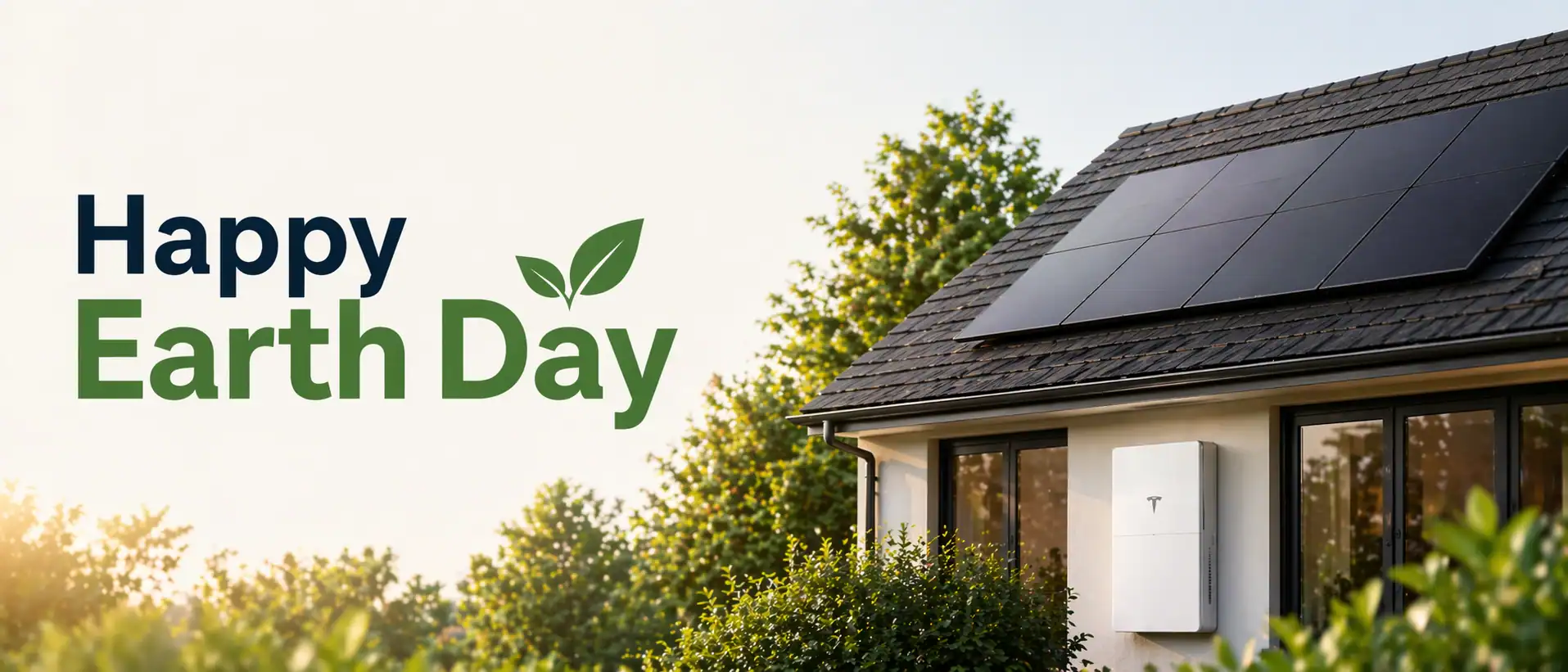
Earth Day starts at home
Earth Day is a good reminder that sustainability does not have to be all or nothing. For most homeowners, it starts with practical choices that reduce waste, improve efficiency, and make better use of energy every day. That might mean using less electricity, upgrading equipment over time, or learning how clean energy technologies like solar and battery backup can reduce your home’s environmental impact.
What makes this especially relevant right now is that clean energy is no longer a fringe idea. It is becoming a larger and more normal part of how homes and communities are powered across the United States. Solar in particular has moved from a niche option to a major source of new electricity generation.
| Earth Day fact: In 2025, solar accounted for 54% of all new electricity-generating capacity added in the U.S. Source |
Why solar matters right now
Solar matters because it is one of the clearest ways to produce electricity without adding more fossil fuel emissions. Instead of relying entirely on power generated far away, a solar energy system lets a home create electricity right where it is used. That reduces dependence on conventional grid power and helps grow the share of clean energy in the overall mix.
It also matters because solar is still growing quickly. The U.S. installed 43.1 GW of solar in 2025, and the country now has enough installed solar to power 47 million homes. Those numbers show that solar is not slowing down. It is becoming a bigger part of how the country meets energy demand, and homeowners are part of that shift.
For Earth Day, that makes solar a meaningful topic. It is not just about technology or utility bills. It is about participating in a cleaner energy future in a way that feels practical and local.
| Earth Day fact: The U.S. now has enough installed solar to power 47 million homes. Source |
How home solar supports sustainability
At the home level, solar supports sustainability by producing clean electricity on site. That means less reliance on grid power that may still come from fossil fuels, and it means lower carbon impact over time from the electricity your home uses every day.
For many homeowners, that is one of the most appealing parts of solar. It turns the roof into a productive space that generates clean energy without requiring new land to be developed. While large utility-scale solar projects are important, rooftop solar adds a different sustainability benefit because it uses space that is already built on. That helps make clean energy more distributed and more efficient from a land-use perspective.
This is also where Earth Day messaging can stay grounded. Going solar does not mean trying to change the entire world overnight. It simply means one household is choosing to use more clean energy and reduce part of its footprint over time.
| Earth Day fact: Utility-scale solar typically uses about 5 to 10 acres per MW, which is one reason rooftop solar is such an efficient use of already-developed space. Source |
Battery backup helps clean energy go further
Battery backup adds another important piece to the sustainability story. Solar panels produce electricity during the day, but a battery stores that clean energy for later use. That means the home can use more of its own solar power at night, during peak utility periods, or during an outage instead of sending all of that daytime production back to the grid.
That gives homeowners more control over when and how they use the clean energy they generate. It also makes solar more useful across the full day, not just during sunny afternoon hours. In other words, battery backup helps stretch the value of clean energy and lets a household rely more on electricity it produced itself.
There is also a community benefit. When many home batteries are connected together through programs often called Virtual Power Plants, they can help support the grid during times of high demand. Instead of one battery helping only one home, a network of batteries can reduce strain across a wider area by sharing stored energy when it is needed most. That means battery backup can support both household resilience and broader community reliability at the same time.
| Earth Day fact: Solar and storage together made up 79% of all new U.S. electrical capacity in 2025, showing how closely batteries are now tied to the clean energy transition. Source |
The bigger sustainability picture
One of the more interesting parts of the solar conversation is how much room there is for clean energy to grow. According to DOE’s Solar Futures Study, even in a future with much more solar, ground-based solar would require a maximum land area equal to about 0.5% of the contiguous U.S. surface area by 2050. That helps put the scale question in perspective. Solar growth is significant, but it is not as land-hungry as many people assume.
At the same time, distributed and rooftop solar have enormous potential. If more homes produced more of their own electricity, the need for fossil-fuel-generated power would fall. Rooftop systems alone will not replace every fossil fuel source by themselves, but they can make a very real contribution to a cleaner grid, lower emissions, and a more resilient energy system.
That is a useful Earth Day takeaway because it makes sustainability feel less abstract. One solar system may be one household decision, but multiplied across neighborhoods and communities, those decisions add up.
| Earth Day fact: DOE says even a high-solar future would require ground-based solar on only about 0.5% of the contiguous U.S. land area. Source |
A simple Earth Day takeaway
Earth Day is not about doing everything perfectly. It is about recognizing that small and practical steps can have real impact over time. For some homeowners, that begins with turning off lights, using less energy, or making simple efficiency upgrades. For others, it may mean learning how solar and battery backup can help power a home more cleanly.
Either way, the bigger idea is the same. Sustainability starts with choices that fit real life. Clean energy is growing, battery backup is making it more flexible, and homeowners have more ways than ever to be part of that shift.
Other Recent Posts
Jul - 2026
Feeling the Heat? How Carolina Homeowners Can Lower Energy Costs and Prepare for Storm Outages

Jun - 2026
250 Years of Independence, 250kW of Solar
May - 2026
Duke Energy Carolinas PowerPair Update: What DEC Customers Need to Know Now

Apr - 2026
How to Celebrate Earth Day with Solar, Battery Backup, and Clean Energy
Apr - 2026
Tesla Powerwall 3 Rebate Extended: How North Carolina Homeowners Can Combine It With PowerPair
